
 by furqan
Dubai has built a reputation as one of the world’s most important real estate destinations. Its modern infrastructure, international business environment, tax policies, luxury lifestyle, tourism industry, and large foreign-investor base have attracted buyers from across the globe.
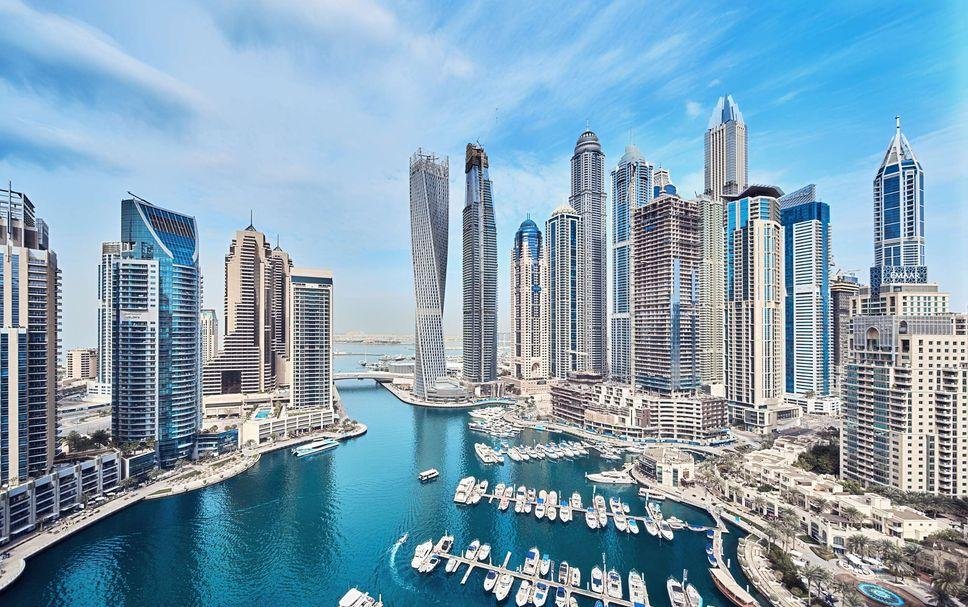
However, being an international property hub does not make a market immune to downturns. Dubai’s real estate sector has experienced periods of rapid growth, rising prices, and strong investor demand, followed by concerns about affordability, oversupply, and changing economic conditions. Isi wajah se aksar yeh bola jata hai ke Dubai ka doobna chahe kisi bhi wajah se ho, lekin yeh baat hamesha zehen mein rehni chahiye ke har urooj ko zawal hai. Dubai aik zamane mein jis tarah ka aalmi markaz (international hub) tha, ab waqt aur halat ke sath uski woh pehli wali heysiyat nahi rahi, ya kam az kam us mein tabdeeli zaroor aayi hai.
To understand why people sometimes describe the Dubai property market as slowing down or becoming risky, we need to look at several key factors:
1. Rapid Price Growth Can Create Pressure
One of the biggest risks in any property market is extremely rapid price growth. Dubai experienced significant increases in residential prices during the recent property boom. Deloitte reported that average residential sales prices increased by around 20% in 2024, while rents increased by about 19%. When prices rise faster than incomes and rents, properties become increasingly expensive for ordinary buyers, causing market activity to cool down.
2. The Risk of Too Much New Supply
Dubai is famous for its continuous construction and development pipeline. Thousands of new apartments, villas, and commercial properties are launched every year. Property Finder noted that improving supply was beginning to catch up with strong demand. However, if developers deliver properties faster than genuine demand grows, the market can experience temporary oversupply, putting pressure on rents and resale prices.
3. Heavy Dependence on Investor Sentiment
Dubai attracts a large number of international investors. While this is a strength, it also makes the market sensitive to global shifts. If foreign buyers become concerned about interest rates, geopolitical tensions, or future returns, they may postpone purchases, leading to a noticeable drop in transaction volumes.
4. Off-Plan Property Creates Additional Risk
Off-plan projects represent a major part of Dubai’s property market. Research on Dubai’s 2025 residential market showed that off-plan transactions represented a very large share of activity. A market heavily dependent on continuous off-plan sales can become vulnerable if buyer confidence wanes or project execution delays occur.
5. Global Economic and Geopolitical Events
Events outside the UAE heavily influence its property market. Changes in interest rates, international investment flows, regional conflicts, oil prices, and currency movements affect decisions by foreign investors. For example, Reuters reported that Dubai’s property sector showed signs of weakness during March 2026 amid regional conflict, with transaction volumes falling sharply during the early part of that month.
6. Affordability Can Become a Problem
For middle-income residents, rapidly increasing housing costs make ownership difficult. When property prices become disconnected from local earnings, demand relies almost entirely on foreign wealth, which can make the market unpredictable.
7. Segmented Market Realities
It is important to remember that Dubai’s property market is not uniform. A luxury property on Palm Jumeirah behaves differently from an apartment in an emerging community. Knight Frank reported that while the residential market reached record transaction levels in 2025 (with over 270,000 transactions worth approximately AED 917 billion), the gap between luxury and mainstream segments widened significantly.
Conclusion
Dubai’s position as a real estate hub does not guarantee perpetual growth. As history shows, har urooj ko zawal hai, and even the most prominent international hubs face periods of correction, slowdown, or structural shift.
While market statistics show high transaction values in recent years, the combination of oversupply, shifting international sentiment, high prices, and global conflicts proves that the market faces real vulnerabilities. For buyers and investors, recognizing these risks is essential before making long-term decisions.